Decoding the Past: Materials, Methods, and Meaning in Indigenous Ghanaian Art | Art & Design Foundation SHS1 Sem1 Week1 (NaCCA/WASSCE)
100% NaCCA ALIGNED: Indigenous Ghanaian Art – Week 1 Deep Dive
Welcome to the foundation of creativity! At School Support Ghana, we ensure every lesson adheres strictly to NaCCA standards, providing SHS 1 learners with the core knowledge needed for artistic mastery and WASSCE success. This week, we begin our creative journey by stepping back in time to study the powerful and profound art made by our ancestors before colonization.
Objectives: What You Will Master (NaCCA Standard 1.1.1.CS.1)
By the end of this foundational study, you will be able to clearly identify and analyze indigenous Ghanaian artworks based on specific historical and cultural criteria. We are mastering the art of analysis.
- Identify: Major indigenous Ghanaian artworks from the pre-colonial period (e.g., Akuaba, Sankofa Gold Weights).
- Analyze Materials: Determine the physical substances used (wood, brass, clay) and explain why those materials were chosen.
- Analyze Processes: Explain the methods of fabrication (carving, casting, painting).
- Explain Relevance: Articulate the socio-cultural relevance and uses of the artworks within the community that created them.
The Concept: Understanding Indigenous Art Through the Feynman Technique
The best way to understand indigenous art is to ask three simple questions about every object: What is it made of? How was it made? Why did they need it? Indigenous art is simply art that originated naturally in a specific region, created by the native people using local resources and knowledge, long before external influences arrived.
1. Material: The Local Palette
The material used is not random; it is a deliberate choice tied to local geology, resources, and spiritual beliefs. For example, wood is abundant in the forest regions (Akan), while earth and clay are the primary resources in the northern savanna regions (Gurune). Materials like brass and gold were reserved for objects of high status, power, or trade, indicating complex economic systems.
2. Method: Handed-Down Skills
The method refers to the technique used to transform the raw material into the finished artwork. If the material is wood, the method is carving. If the material is brass, the method is likely casting (specifically the intricate lost-wax technique used by the Ashanti). These methods are master skills, often passed down through guilds or specific families, ensuring cultural continuity.
3. Socio-Cultural Relevance: The Purpose
In pre-colonial Ghana, art was rarely ‘just for looking at.’ It was functional, spiritual, or historical. Socio-cultural relevance means the purpose the art served within the community’s social structure and beliefs. Did it protect the home? Did it teach a moral lesson? Was it used in rituals, governance, or diplomacy? Understanding this purpose unlocks the true meaning of the artwork.
Ghana Real-World Case: Three Pillars of Pre-Colonial Art
Let’s apply our three questions to three critical examples of indigenous Ghanaian art, as required by the NaCCA curriculum:
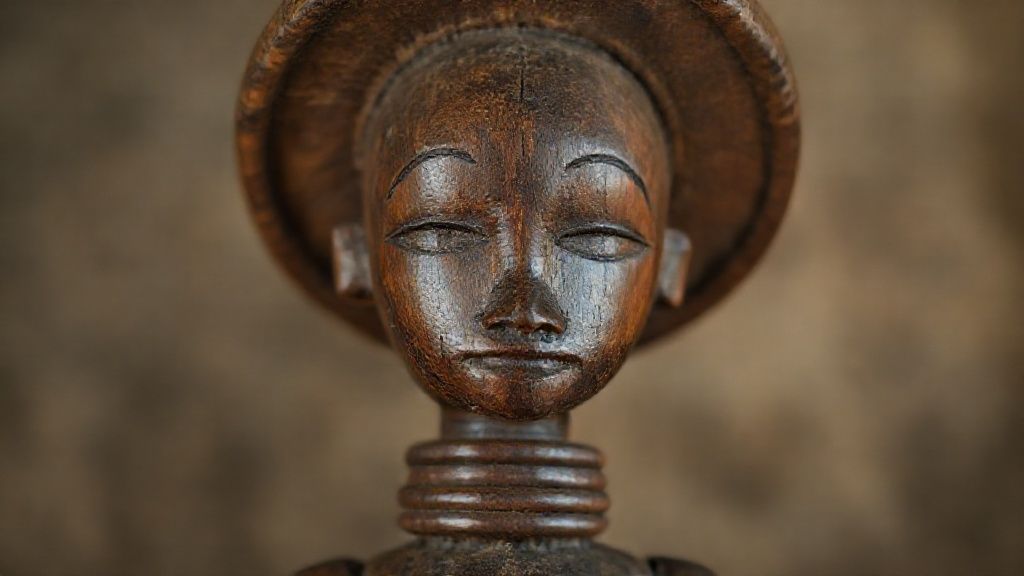
- The Akuaba Doll (Akan/Ashanti)
- Material: Typically carved from dense, fine-grained hardwood (e.g., Sese wood).
- Method: Hand-carving and sometimes blackened with natural dyes or smoke to achieve a rich, deep finish.
- Socio-Cultural Relevance: The Akuaba is a powerful ritual object associated with fertility and ideal beauty. Akan women seeking conception would carry the doll on their backs, treating it as a real child. Its characteristic large, disc-shaped head represents the idealized aesthetic standard of a healthy and beautiful baby. This demonstrates the paramount importance of lineage and family within the culture.
- Sankofa Gold Weights (Ashanti)
- Material: Brass or copper alloys (known as Kuduo).
- Method: The complex and highly skilled Lost-Wax Casting (Cire Perdue) technique. The artist sculpts the design in wax, encases it in clay, melts the wax out, and pours molten brass into the resulting cavity.
- Socio-Cultural Relevance: Initially, their primary use was utilitarian—measuring gold dust for trade. However, they soon evolved into a rich visual encyclopedia of Ashanti moral, proverbs, and history. The famous Sankofa bird, for instance, teaches the wisdom of ‘looking back’ to learn from the past. Their existence highlights the sophisticated economic structures and profound philosophical depth of the Ashanti Empire.
- Sirigu Wall Paintings (Gurune/Northern Ghana)
- Material: Earth, clay, cow dung, and naturally derived pigments (like red laterite and white kaolin).
- Method: Free-hand application of earth pigments directly onto the mud walls of compounds (Nankani architecture). The designs are refreshed annually.
- Socio-Cultural Relevance: Far beyond decoration, the geometric and symbolic patterns serve as spiritual protection (apotropaic symbols) for the inhabitants against evil spirits and misfortune. The patterns often dictate social roles and lineage within the household. This is a powerful example of art integrated completely into domestic, functional architecture.
WASSCE & NaCCA Strategy: Mastering Analysis
For success in Art & Design Foundation, you must move beyond mere identification. WASSCE questions will demand high-level analysis (Application and Evaluation), aligning perfectly with NaCCA’s core indicators. When presented with an image of pre-colonial art, always structure your analysis this way:
- The “What”: Name the artwork (e.g., Akuaba).
- The “How”: State the process (Carving).
- The “Why Material”: Explain the material choice (Hardwood for durability and detailed carving).
- The “Why Cultural”: Connect the object to the cultural belief (e.g., fertility rituals reflecting the centrality of lineage).
By focusing on the socio-cultural function, you demonstrate complete mastery of the NaCCA standard. Remember, every indigenous artwork is a visual history book. Learn to read its symbols and materials, and you master the curriculum.
For Teachers: Purchase our NaCCA-aligned Premium Package to simplify your lesson preparation and teaching.
For Students: Get the NaCCA-aligned Premium Handout for easy-to-follow explanations and week-by-week Q&A packages.