
Matter: The Hidden Science Driving Ghana’s Development | Chemistry SHS 1 SEM 1 WEEK 1 (WASSCE & NaCCA Aligned)
Welcome to the foundational course for SHS 1 Chemistry! This week, we establish why chemistry is not just a subject, but the underlying science of everything we touch, taste, and build in Ghana. More importantly, we learn how to explore this exciting world safely.
### SECTION 1: Quick Summary
* **Definition:** Chemistry is the study of matter—anything that has mass and occupies space—and the changes it undergoes.
* **Relevance:** Chemistry is fundamental to Ghana’s economy, driving agriculture (fertilizers), health (pharmaceuticals), and energy (petroleum products).
* **Safety First:** The laboratory requires strict adherence to rules, including wearing personal protective equipment (PPE) like goggles and handling chemicals correctly (Acid to Water).
* **Universal Language:** Hazard symbols (pictograms) communicate immediate danger across all languages (e.g., Flammable, Corrosive, Toxic).
[Insert YouTube Lesson Video Here]
### SECTION 2: Academic Core
## Defining Chemistry: The Science of Everything
Chemistry, often called the ‘central science,’ bridges physics and biology by focusing on the composition, structure, properties, and reactions of matter. Every material existence, from the air we breathe to the phone in our hand, is governed by chemical principles. Understanding chemistry allows us to predict how substances will interact and how we can manipulate them to create new materials or solve complex problems.
### The Core Branches
Chemistry is typically categorized into several overlapping branches. **Organic Chemistry** focuses on compounds containing carbon, which is the basis for all life, plastics, and fuels. **Inorganic Chemistry** deals with materials that are generally non-carbon-based, such as metals, minerals, and salts. **Physical Chemistry** explores the fundamental physical laws governing chemical systems, focusing on energy, rate, and transformation. Finally, **Analytical Chemistry** involves the identification and quantification of chemical components in samples, crucial for quality control in industries like food processing and water purification.
## Chemistry in Ghanaian Development
In a developing nation like Ghana, chemistry is an indispensable tool for growth. In **Agriculture**, soil chemistry determines crop yield, and chemists formulate effective fertilizers and pesticides to boost production of cocoa, maize, and yams. In the **Health Sector**, pharmaceutical chemistry is responsible for discovering and manufacturing essential medicines, from anti-malarials to pain relievers, ensuring public health standards are met. Furthermore, our **Energy Sector** relies heavily on chemistry, particularly in the refining of crude oil at places like Tema to produce petrol, diesel, and gas, and in the emerging field of renewable energy storage technologies.
## The Unbreakable Laws of the Laboratory
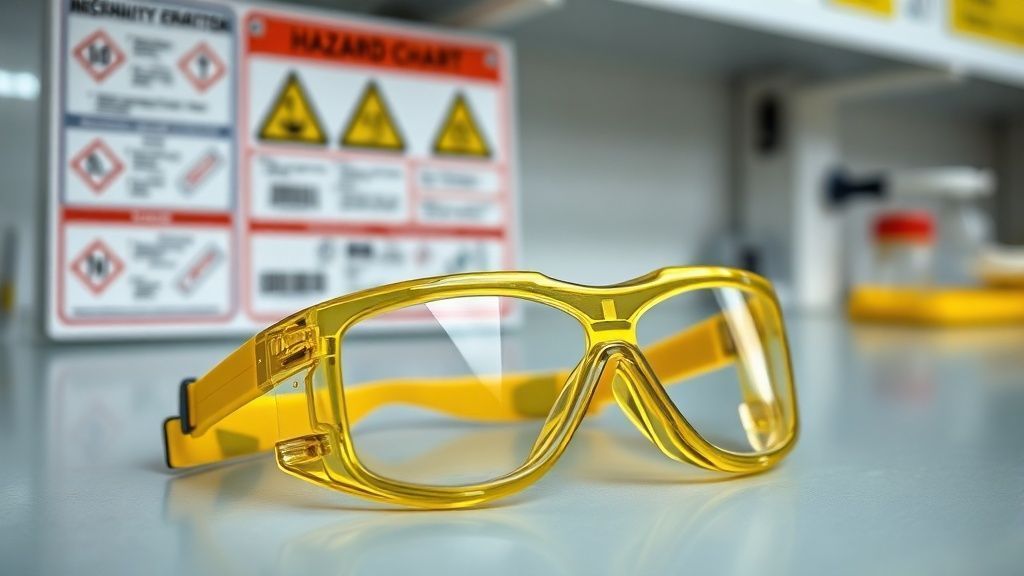
Working with chemicals demands precision and respect for safety. The laboratory is a controlled environment, and specific rules are non-negotiable. **Personal Safety Equipment (PPE)** is paramount; safety goggles must be worn at all times to protect eyes from splashes or fumes. Never eat, drink, or chew gum in the lab, as this poses a serious risk of ingesting harmful substances. Always follow instructions precisely, especially when mixing chemicals. A foundational rule when preparing dilute solutions is ‘Acid to Water,’ adding the acid slowly to the water while stirring, never the reverse, to dissipate the heat generated and prevent violent splashing.
Proper waste disposal is also critical. Chemicals must never be poured down the sink unless specifically instructed. Dedicated waste containers prevent environmental contamination and potential violent reactions in the plumbing system. Treating the lab and its equipment with extreme care ensures that it remains a safe space for everyone to learn and experiment. Misconduct can lead to severe accidents, making understanding and signing the laboratory safety contract a rite of passage for every new science student.
### Interpreting Hazard Symbols
Since chemicals are often imported or used across different languages, universal symbols, known as GHS pictograms, are used on labels. Learners must be able to recognize and understand these symbols immediately:
* **Skull and Crossbones (Toxic):** Indicates a chemical that is lethal, even in small doses, upon ingestion, inhalation, or skin contact. Requires maximum protection and restricted handling.
* **Flame (Flammable):** Marks liquids, solids, or gases that can easily catch fire, often at or near room temperature. Must be kept away from heat, sparks, and open flames.
* **Exploding Bomb (Explosive):** Represents substances that can detonate or react violently, posing a severe physical hazard. These must be handled with extreme caution and minimal friction.
* **Corrosion Symbol (Corrosive):** Indicates materials that can damage or ‘eat away’ skin, eyes, and metals. Strong acids and bases carry this symbol, necessitating the use of gloves and eye protection.
* **Exclamation Mark (Harmful/Irritant):** Used for substances that cause less severe toxicity, irritation to skin or eyes, or other specific health effects like sensitization. This is one of the most common symbols.
### SECTION 3: Local Laboratory
Chemistry is not confined to the classroom; it happens all around us in Ghana. Consider the fermentation process involved in preparing **kenkey**. This staple food uses anaerobic respiration—a fundamental biochemical process—to convert starch into organic acids, giving it its characteristic sour taste and preserving it. This is applied microbiology and organic chemistry in action. Even when navigating the bustling marketplace of **Makola**, the colours and dyes used in textiles are products of complex synthetic chemistry, while the materials of the market structure (cement, iron) are inorganic compounds.
Furthermore, national initiatives like the **Free SHS Policy** rely on chemistry indirectly. The government needs sound chemical principles to manage waste and water resources effectively in large school populations, requiring chemists and environmental scientists to maintain sanitation and health standards for hundreds of thousands of learners. The safety protocols learned this week are therefore vital for future professionals contributing to national well-being.
### SECTION 4: Self-Check Quiz
1. Which chemical process is primarily responsible for giving fermented foods like kenkey their sour taste?
a) Neutralization
b) Oxidation
c) Anaerobic Respiration (Fermentation)
d) Combustion
2. What is the cardinal rule for mixing concentrated acid and water in the laboratory?
a) Pour water into the acid quickly.
b) Pour acid into the water slowly while stirring.
c) Mix equal parts simultaneously.
d) Add a catalyst before mixing.
3. Which hazard symbol universally indicates that a substance can damage or ‘eat away’ at skin and eyes?
a) Flame
b) Skull and Crossbones
c) Exploding Bomb
d) Corrosion
Struggling with these questions? The full Semester Mastery Pack has 50+ practice questions for this topic.
### SECTION 5: Premium Bridge
Don’t just read—Master the entire SEM 1 syllabus. Download our NaCCA-aligned Premium Teacher’s Suite or Student Mastery Handout for the full 14-week experience.
**Answer Key:** 1. c, 2. b, 3. d