Regional Materials And Privileged Materials Explained for SHS 2 Art & Design Foundation (Semester 2, Week 1)
Artists use both valuable privileged materials and locally available regional materials to create meaningful and expressive artworks.
What You Will Learn
- The meaning of privileged materials
- The meaning of regional materials
- Examples of privileged materials in art
- How artists use alternative regional materials
- The relationship between materials, culture, and artistic expression
Main Explanation
Privileged materials are high-quality and specialised materials valued for artistic beauty, durability, and prestige. These materials have been used throughout history in painting, sculpture, textiles, jewellery, ceramics, and printmaking.
In African art, materials such as gold, ivory, and precious stones symbolised wealth, authority, and spiritual power. In Ghana, gold was used in jewellery and royal regalia, while ivory carvings decorated royal palaces in Benin, Nigeria.
Globally, privileged materials also represented power and divinity. Ancient Egyptians used gold and precious stones in funerary objects, while Renaissance artists used expensive pigments, marble, and linen canvas to produce masterpieces.
Examples of privileged materials include:
- Gold
- Marble
- Bronze
- Oil paints
- Porcelain
- Silk
- Precious stones
Modern privileged materials also include digital tools such as tablets, styluses, archival inks, and advanced printing materials used in contemporary art.
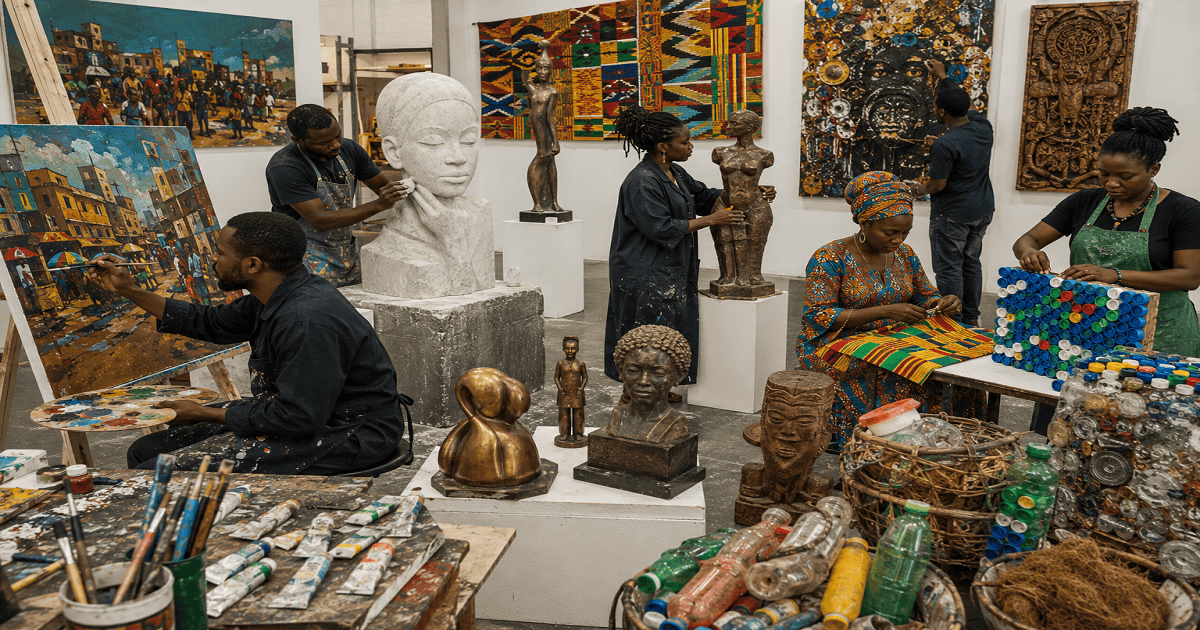
Regional materials are locally available materials used creatively as alternatives to privileged materials. Artists use wood, clay, fibres, plastics, paper, fabrics, leather, and found objects to create artworks that reflect local culture and environmental awareness.
The Yoruba people of Nigeria are known for wooden carvings representing deities and ancestors. Ghanaian kente cloth symbolises cultural pride and heritage, while Japanese raku ware ceramics connect artistic practice with nature and tradition.
Contemporary artists around the world use alternative materials to address social, cultural, and environmental issues. El Anatsui uses discarded bottle caps and aluminium strips to create tapestry-like artworks inspired by African textiles.
Serge Attukwei Clottey transforms plastic containers into installations that comment on environmental concerns. Yinka Shonibare uses Dutch wax fabrics to explore colonialism and identity.
Artists such as Dorothy Amenuke, Olafur Eliasson, Rachel Whiteread, and Vik Muniz experiment with fibres, fabrics, water, concrete, sugar, and garbage to create innovative artworks and installations.
Examples Of Privileged Materials
| Material | Use In Art | Meaning |
|---|---|---|
| Gold | Jewellery and regalia | Wealth and prestige |
| Bronze | Sculpture | Permanence and power |
| Marble | Sculpture | Beauty and precision |
| Oil Paints | Painting | Rich colour and blending |
| Silk | Textiles | Luxury and elegance |
Regional Materials And Alternative Art Practices
| Material | Artist/Culture | Purpose |
|---|---|---|
| Wood | Yoruba culture | Religious carving |
| Plastic Containers | Serge Attukwei Clottey | Environmental awareness |
| Bottle Caps | El Anatsui | Commentary on waste |
| Natural Fibres | Dorothy Amenuke | Soft sculpture installations |
| Found Objects | Yaw Owusu | Creative transformation |
Worked Examples
Example 1
Scenario: A Ghanaian artist creates a large installation using discarded bottle caps.
Explanation: The artist uses regional and recycled materials creatively to discuss waste, environmental issues, and African cultural identity.
Example 2
Scenario: A sculptor chooses marble instead of wood for a monument.
Explanation: Marble is a privileged material valued for durability, beauty, and its ability to capture fine details in sculpture.
Why This Topic Matters
Understanding privileged and regional materials helps learners appreciate cultural heritage, sustainability, and artistic innovation. It also encourages creativity and the responsible use of environmental resources in artmaking.
Quick Practice
- Define privileged materials.
- State two examples of regional materials.
- Explain how artists use alternative materials to address environmental concerns.
Summary
Privileged materials are specialised and valuable materials used for artistic excellence and prestige, while regional materials are locally sourced alternatives used creatively in artmaking. Artists across cultures and historical periods use both types of materials to communicate ideas, preserve traditions, and address environmental and social issues. These materials enrich artistic expression and cultural identity.
Access NaCCA-aligned Support Packs
Download your structured NaCCA-aligned Teacher Support Pack and Student Learning Pack, designed for clarity, practicality, and reliable teaching and learning.