Oral Language And Grammar Explained for SHS 2 English Language (Semester 2, Week 3)
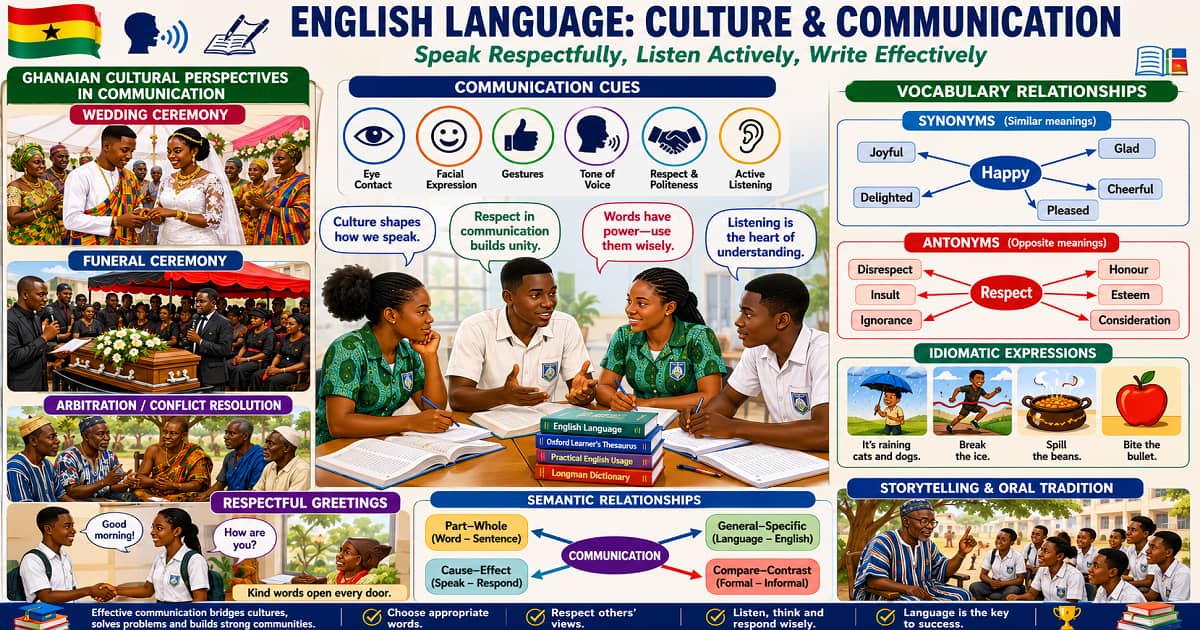
Communication is influenced by culture, traditions, and the words we choose. Understanding cultural perspectives and vocabulary helps people communicate more effectively in different situations.
What You Will Learn
- The influence of culture on communication
- Characteristics of Ghanaian communication
- Communication styles in different ceremonies
- The meaning of vocabulary in context
- Important vocabulary relationships such as synonyms and antonyms
Main Explanation
Culture shapes the way people communicate. Different societies have different approaches to communication, including how they express emotions, relate to authority, and interpret messages. Cultural awareness promotes effective communication and stronger relationships.
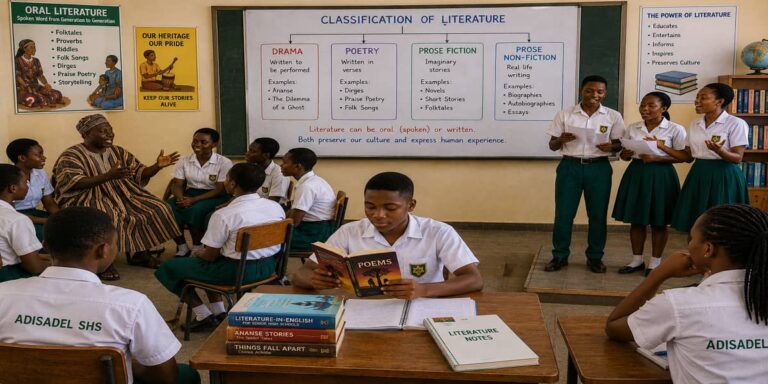
Ghanaian communication is characterized by collective values, respect for elders and authority figures, politeness, storytelling, hospitality, and indirect communication. These features encourage harmony and social cohesion. Non-verbal cues and emotional expressions also play important roles in communication.
Different occasions require different styles of communication. Weddings emphasize celebration and unity. Arbitration encourages compromise and active listening. Funerals require sympathy and respect, while traditional festivals encourage vibrant and joyful communication. These differences show how culture influences language use.
Cultural communication helps preserve traditions, strengthen communities, and promote social harmony. It also enables people to understand one another and avoid misunderstandings.
Vocabulary refers to the words and expressions people know and use. Vocabulary involves meanings, connotations, synonyms, antonyms, idioms, collocations, and semantic relationships. A rich vocabulary improves reading, writing, speaking, and comprehension skills.
Communication Styles In Ghanaian Ceremonies
| Ceremony | Communication Style | Main Purpose |
|---|---|---|
| Wedding | Celebratory and respectful | Promote unity |
| Arbitration | Indirect and polite | Resolve conflicts |
| Funeral | Sombre and sympathetic | Support the bereaved |
| Traditional Festival | Vibrant and expressive | Celebrate culture |
Vocabulary Relationships
| Relationship | Meaning | Example |
|---|---|---|
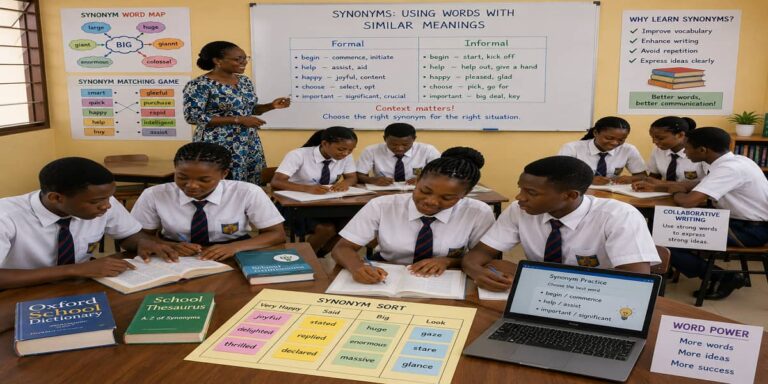
| Synonyms | Words with similar meanings | Beautiful and attractive |
| Antonyms | Words with opposite meanings | Rich and poor |
| Idioms | Expressions with figurative meanings | Spill the beans |
| Collocations | Words frequently used together | Strong coffee |
Worked Examples
Example 1
Scenario: A mediator listens carefully to both sides during a family dispute.
Explanation: Active listening and respectful communication help resolve conflicts and maintain harmony, which are important aspects of Ghanaian communication.
Example 2
Scenario: A learner uses the word “joyful” instead of “happy” while writing an essay.
Explanation: “Joyful” is a synonym of “happy”. Using synonyms enriches vocabulary and improves expression.
Why This Topic Matters
Understanding cultural communication and vocabulary development helps learners communicate appropriately in different social and academic settings. These skills strengthen relationships, improve language proficiency, and promote appreciation of cultural diversity.
Quick Practice
- State two characteristics of Ghanaian communication.
- Explain the importance of storytelling in communication.
- Differentiate between synonyms and antonyms.
Summary
Cultural perspectives influence communication styles and contribute to social harmony and cultural identity. Vocabulary development improves language skills and enables individuals to communicate more accurately and effectively in different contexts. Together, these concepts strengthen communication and understanding.
Access NaCCA-aligned Support Packs
Download your structured NaCCA-aligned Teacher Support Pack and Student Learning Pack, designed for clarity, practicality, and reliable teaching and learning.