Concept Of Materials, Tools And Methods Explained for SHS 1 Art & Design Studio (Semester 2, Week 1)
Artists use different materials, tools, and methods from their environment to create meaningful and creative artworks.
What You Will Learn
- The meaning of conventional and non-conventional materials
- The concept of workability in art and design
- Examples of tools used in 2-dimensional artworks
- The advantages of using environmental materials
- Methods used in art and design studio tasks
Main Explanation
The concept of materials in art and design is influenced by how objects and substances are used in different environments over long periods of time. Different geographical locations provide unique materials that artists can use creatively.
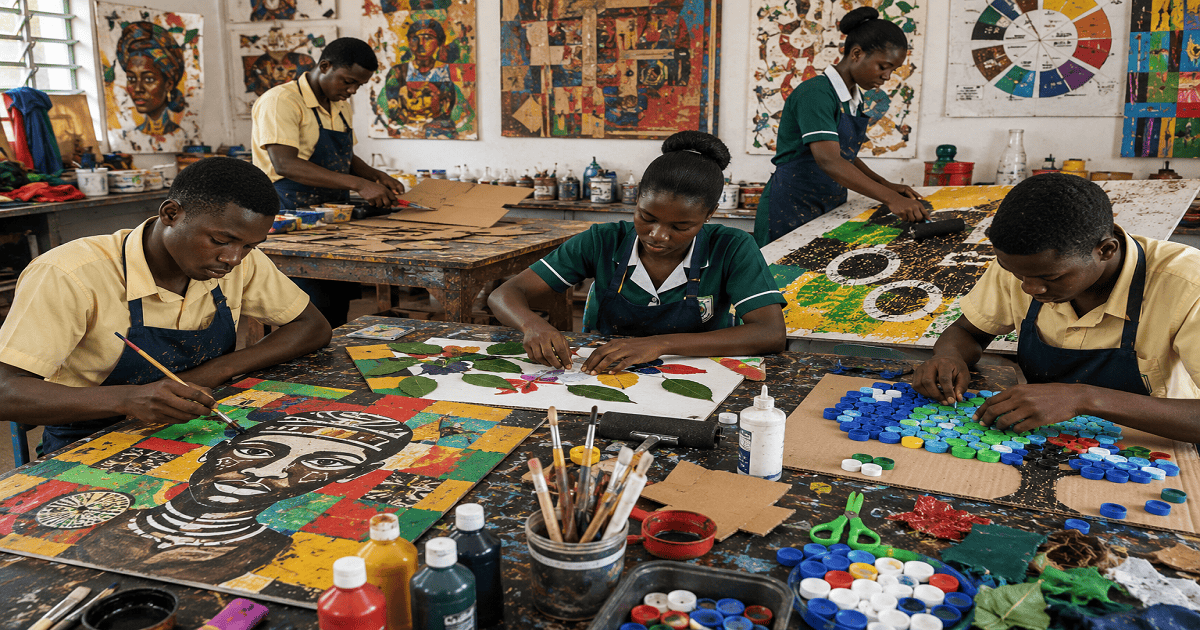
Artists use both conventional and non-conventional materials in art production. Conventional materials are traditional materials such as paints, pencils, brushes, paper, and fabric. Non-conventional materials include recycled and environmental objects such as plastics, bottle tops, leaves, cardboard, and sand.
Workability refers to how easy and suitable materials and tools are for artistic activities. A workable material can easily be cut, shaped, painted, printed, or combined with other materials.
Art and Design Studio activities involve many artistic fields, including painting, printmaking, textiles, murals, collage, graphic design, pyrography, and drawing. Each field requires specific materials, tools, and methods.
For example, painting uses brushes and colour application methods, while collage uses scissors, glue, and assembling techniques. Printmaking may involve rollers and carving tools.
Non-conventional materials provide many advantages. They reduce waste, promote environmental awareness, encourage creativity, and make art materials more accessible and affordable.
Learners can create manual or digital inventories of available materials using photographs, videos, sketches, and real objects. These inventories help artists identify suitable environmental resources for artistic production.
Examples Of Materials And Their Uses
| Material | Type | Artistic Use |
|---|---|---|
| Paper | Conventional | Drawing and painting |
| Cardboard | Non-Conventional | Collage and model making |
| Leaves | Natural Material | Texture printing |
| Bottle Tops | Recycled Material | Decorative design work |
| Fabric | Conventional | Textile and printing activities |
Tools And Methods In Art
| Tool | Method | Purpose |
|---|---|---|
| Brush | Painting | Applying colour |
| Scissors | Collage | Cutting materials |
| Roller | Printmaking | Creating printed patterns |
| Pencil | Drawing | Sketching and shading |
| Burning Tool | Pyrography | Decorative surface burning |
Worked Examples
Example 1
Scenario: A learner uses bottle tops and cardboard to create a decorative poster.
Explanation: Bottle tops and cardboard are non-conventional materials that can be creatively combined to produce textured and colourful artworks.
Example 2
Scenario: Learners create an inventory of environmental materials using photographs and sketches.
Explanation: The inventory helps learners identify workable materials and tools available within their environment for art and design tasks.
Why This Topic Matters
Understanding materials, tools, and methods helps learners develop creativity, problem-solving skills, and environmental awareness. It also encourages the use of affordable and accessible resources in artistic production.
Quick Practice
- Define workability in art and design.
- State two examples of non-conventional materials.
- Explain one advantage of using environmental materials in art.
Summary
Materials, tools, and methods are essential components of art and design. Conventional and non-conventional materials can both be used creatively to produce 2-dimensional artworks. Workability helps artists determine the suitability of materials and tools for artistic tasks. Understanding these concepts improves creativity, environmental awareness, and artistic skills.
Access NaCCA-aligned Support Packs
Download your structured NaCCA-aligned Teacher Support Pack and Student Learning Pack, designed for clarity, practicality, and reliable teaching and learning.