Concept Of Materials, Tools And Methods
Introduction
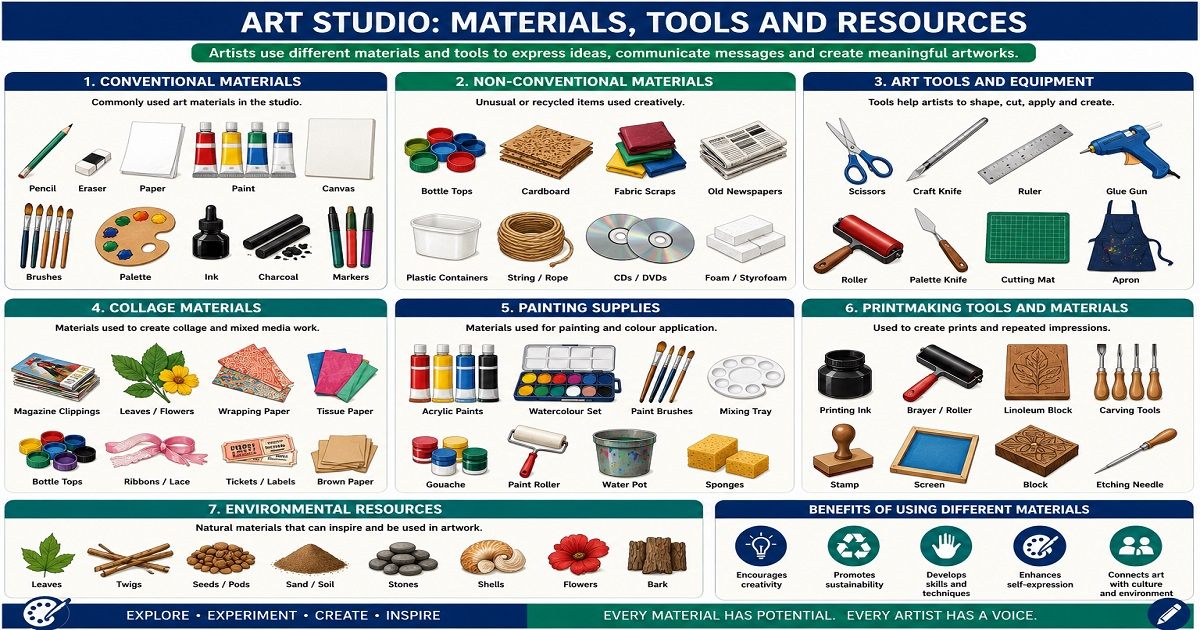
The concept of materials, tools, and methods in art and design is connected to how objects and substances are used within different environments over time. Artists use both conventional and non-conventional materials to create 2-dimensional artworks. Understanding the workability of these materials helps learners select appropriate resources for creative activities and artistic expression.
Key Concepts
- Conventional Materials: Traditional materials commonly used in art and design such as paint, brushes, paper, and pencils.
- Non-Conventional Materials: Unusual or recycled materials from the environment that can be adapted for artistic purposes.
- Workability: The suitability and ease with which materials and tools can be manipulated for artistic tasks.
- Tools: Equipment used to create artworks, including brushes, scissors, cutters, rollers, and printing tools.
- Methods: Techniques or procedures used in creating art and design works.
- Inventory: A collection or record of available tools and materials for artistic use.
Explanation
Materials in art and design are influenced by geographical environments and cultural practices. Different environments provide different substances and objects that artists can use creatively. Some materials may appear similar but possess unique qualities based on how they are sourced and used over generations.
Artists use both conventional and non-conventional materials to produce 2-dimensional artworks. Conventional materials include paper, paint, pencils, fabric, and brushes. Non-conventional materials include recycled objects, leaves, sand, cardboard, bottle tops, plastics, and other environmental resources.
Workability refers to how suitable materials and tools are for artistic activities. Workable materials are easy to manipulate, shape, cut, paint, print, or combine in art and design tasks.
Artists and designers use a variety of tools and methods across different fields in the Art and Design Studio. These fields include:
- Textiles and fabric printing
- Printmaking
- Painting
- Murals
- Collage
- Graphic design
- Pyrography
- Drawing
Conventional and non-conventional materials provide several advantages. They encourage creativity, reduce cost, promote environmental awareness, and provide learners with opportunities to experiment with different artistic techniques.
Learners can generate manual or digital inventories of materials using photographs, videos, real objects, drawings, and sketches. Such inventories help artists identify resources available in their immediate environments.
Collaboration and group discussions are important in understanding workability. Learners can analyse how materials and tools from the environment are suitable for different art and design studio tasks.
Conventional And Non-Conventional Materials
| Type | Examples | Use In Art |
|---|---|---|
| Conventional Materials | Paint, brushes, pencils, paper | Traditional art production |
| Non-Conventional Materials | Bottle tops, leaves, cardboard, plastics | Creative and recycled artworks |
| Natural Materials | Sand, wood, stones | Texture and collage work |
| Fabric Materials | Cloth and textile pieces | Printing and mixed media |
Tools And Methods In Art And Design
| Field | Tools | Methods |
|---|---|---|
| Painting | Brushes and palettes | Colour application |
| Printmaking | Rollers and carving tools | Printing techniques |
| Collage | Scissors and glue | Cutting and assembling |
| Drawing | Pencils and charcoal | Sketching and shading |
| Pyrography | Burning tools | Decorative burning designs |
Examples
Example 1
Problem: Explain why cardboard can be considered a workable non-conventional material.
- Examine the texture and flexibility of cardboard.
- Determine whether it can be cut and shaped easily.
- Consider its usefulness in collage and design tasks.
Final Answer: Cardboard is workable because it is easy to cut, shape, paint, and combine with other materials in artistic activities.
Example 2
Problem: Identify suitable tools for collage work.
- Identify tools used for cutting materials.
- Select tools for joining materials.
- Determine tools suitable for arranging artwork pieces.
Final Answer: Scissors, glue, cutters, rulers, and pencils are suitable tools for collage work.
Application and Activities
- Create a pictorial inventory of materials and tools from the environment.
- Discuss the meaning of workability in groups.
- Analyse the advantages of using non-conventional materials.
- Use photographs and real objects to identify suitable art materials.
Practice Questions
- Define conventional and non-conventional materials.
- Explain the meaning of workability in art and design.
- State three advantages of using workable environmental materials in art.
Summary
The concept of materials, tools, and methods in art and design focuses on how environmental resources can be used creatively in artistic production. Conventional and non-conventional materials both play important roles in 2-dimensional art. Workability determines how suitable materials and tools are for creative tasks. Understanding these concepts helps learners develop creativity, environmental awareness, and practical artistic skills.
Access NaCCA-aligned Support Packs
Download your structured NaCCA-aligned Teacher Support Pack and Student Learning Pack, designed for clarity, practicality, and reliable teaching and learning.