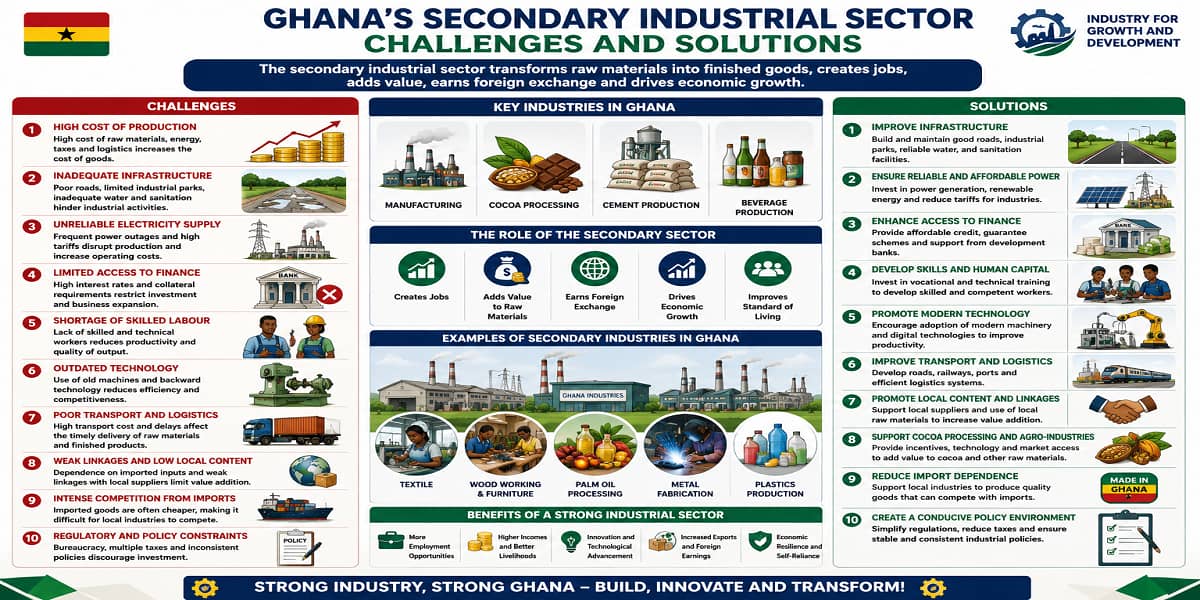
Challenges And Solutions To The Secondary Industrial Sector In Ghana Explained for SHS 2 Economics (Semester 2, Week 11)
The secondary industrial sector transforms raw materials into finished goods that meet consumer and business needs. Its growth is essential for industrialisation, employment, and economic development in Ghana.
What You Will Learn
- The meaning of the secondary industrial sector
- The major challenges affecting industries in Ghana
- Solutions that promote industrial development
- The importance of technology and infrastructure
- The cocoa processing industry as a practical example
Main Explanation
The secondary industrial sector consists of manufacturing, processing, construction, and energy production activities. It converts raw materials into finished products and creates value that contributes to national economic growth.
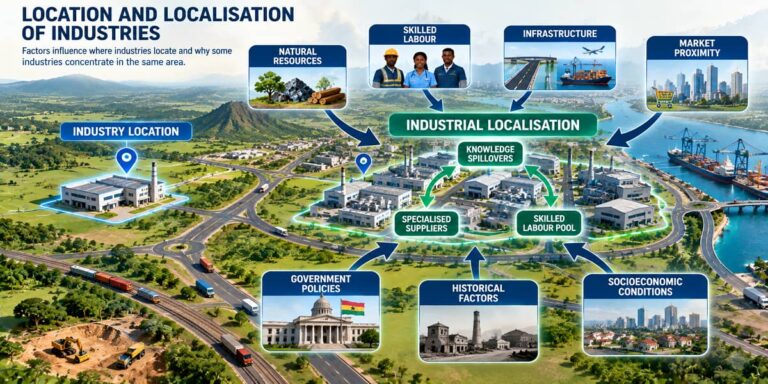
Industries in Ghana face several challenges. Infrastructure deficits such as unreliable electricity, poor roads, inadequate railways, congested ports, and inconsistent water supply increase production costs and reduce efficiency. Limited access to finance restricts industrial expansion, while shortages of skilled labour affect productivity. High production costs, complicated regulations, and limited adoption of modern technology also reduce competitiveness.
Addressing these challenges requires investment in infrastructure, affordable financing, vocational training, regulatory reforms, and technological innovation. Encouraging the use of local raw materials and energy-efficient technologies can reduce production costs, while research and development promote industrial competitiveness.
The cocoa processing industry demonstrates how government incentives, improved infrastructure, technology transfer, financial support, and workforce training can increase value addition and strengthen Ghana’s position in international markets. \
Challenges And Solutions
| Challenge | Solution |
|---|---|
| Infrastructure Deficits | Infrastructure development |
| Limited Access To Finance | Affordable industrial financing |
| Skilled Labour Shortage | Vocational education and apprenticeships |
| High Production Costs | Use local raw materials and energy-efficient technologies |
| Regulatory Hurdles | Simplify business procedures |
| Technological Gaps | Promote innovation and research |
Worked Examples
Example 1
Scenario: A manufacturing company experiences frequent production delays because of unreliable electricity supply.
Explanation: Poor infrastructure increases production costs and disrupts manufacturing activities. Improving electricity supply enhances industrial productivity.
Example 2
Scenario: A cocoa processing company receives government tax incentives and modern processing equipment.
Explanation: Financial incentives and technological adoption improve value addition, productivity, and international competitiveness.
Why This Topic Matters
Understanding the challenges and solutions facing Ghana’s industrial sector enables learners to appreciate the role of manufacturing in economic development, employment creation, and value addition to local resources.
Quick Practice
- State three challenges facing the secondary industrial sector.
- Explain one solution to high production costs.
- Describe the importance of vocational training in industrial development.
Summary
The secondary industrial sector is essential for Ghana’s economic development but faces challenges including infrastructure deficits, limited finance, shortages of skilled labour, high production costs, regulatory barriers, and technological gaps. Investment in infrastructure, improved financing, vocational training, innovation, and supportive government policies can strengthen industrial growth and competitiveness.
Access NaCCA-aligned Support Packs
Download your structured NaCCA-aligned Teacher Support Pack and Student Learning Pack, designed for clarity, practicality, and reliable teaching and learning.