How Do We Create Meaning In Art And Design?
Introduction
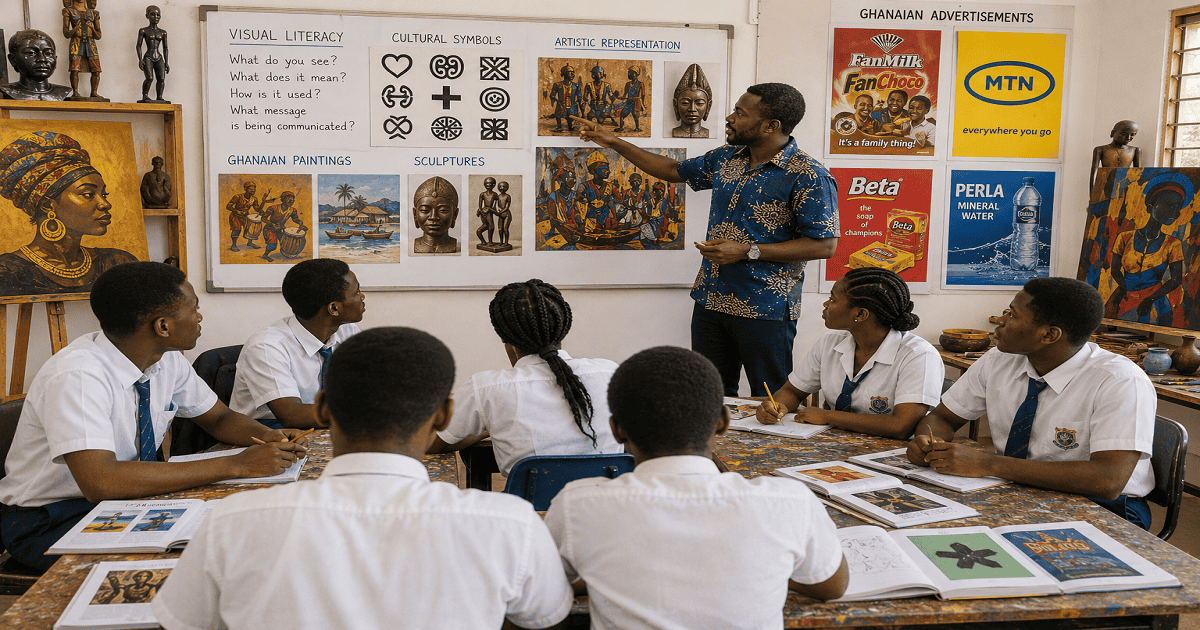
Creating meaning in art and design involves using ideas, symbols, emotions, and cultural experiences to communicate messages through visual forms. Artists and designers use deliberate and thoughtful approaches to encourage viewers to connect with artworks in meaningful ways. Visual literacy helps learners understand how sensory perceptions translate into visual communication within the environment and cultural products.
Key Concepts
- Visual Literacy: The ability to interpret, understand, and create meaning from visual images and artistic forms.
- Representation: Depicting objects, ideas, or subjects to communicate emotions, messages, or narratives.
- Symbolism: The use of colours, objects, signs, or actions to communicate deeper meanings and ideas.
- Knowledge: Understanding information, experiences, and ideas that help people make sense of the world.
- Imitation: Learning through copying or mimicking actions and behaviours to understand new concepts.
- Fantasy: The use of imagination to create fictional worlds, characters, and experiences beyond ordinary reality.
- Gratification: Satisfaction gained from fulfilling desires influenced by culture, values, and beliefs.
- Cloning: A creative process where artists take inspiration from existing ideas to create something new.
- Characterization: Revealing personalities, strengths, and weaknesses to create meaningful and relatable characters.
- Application: Using knowledge and experiences to solve problems and create positive impacts.
Explanation
Meaning in art and design is created through thoughtful visual communication that generates emotions and encourages interpretation. Artists and designers do not impose only one meaning on viewers. Instead, they allow audiences to connect personally with artworks and designs.
One way of creating meaning is by developing a clear concept for an artwork or design. Artists focus on conveying emotions, messages, and stories that guide the viewer’s understanding.
Understanding themes is important because themes guide creative decisions and provide coherence within artworks. Symbols, metaphors, and visual language are also used to enhance storytelling and emotional impact.
Personal expression allows artists to communicate authentic experiences and ideas. Art and design may also provide social and cultural commentary by engaging viewers with meaningful narratives and contexts.
Meaningful art can create emotional connections with audiences through imagery, colours, and symbols. Ethical design may also promote environmental awareness and social benefits.
Collaboration with communities and other artists broadens creative ideas and improves the meaning of artworks. Artists may also experiment and reflect on their work to understand its significance.
Titles, descriptions, and artist statements help viewers understand intended meanings and add layers of interpretation to artworks and designs.
Representation in art and design involves depicting ideas, objects, or subjects to communicate emotions and narratives. Representation may be realistic, abstract, symbolic, expressionistic, or conceptual.
Symbolism uses objects, colours, signs, and actions to communicate hidden meanings and themes. Symbolism enriches storytelling and increases audience engagement.
Imitation is an investigative learning process where artists copy or mimic actions and behaviours to understand new concepts. Cloning extends this idea by creatively transforming inspiration into new artistic works.
Fantasy allows artists to imagine worlds and ideas beyond ordinary reality, while characterization helps audiences connect with personalities and human experiences in stories and artworks.
An example of culturally relevant artistic communication is the J H Henkes Schnapps Kasapreko campaign in Ghana, which incorporates cultural contexts and symbolism in advertising.
Ways Of Creating Meaning In Art And Design
| Approach | Description | Purpose |
|---|---|---|
| Clear Concept | Developing a focused artistic idea | Communicates messages and emotions |
| Symbolism | Using symbols and colours | Adds deeper meaning |
| Personal Expression | Reflecting personal experiences | Creates authenticity |
| Cultural Commentary | Addressing social and cultural issues | Engages viewers meaningfully |
| Collaboration | Working with communities and others | Broadens artistic meaning |
Forms Of Representation In Art And Design
| Type | Characteristics | Function |
|---|---|---|
| Realistic | Represents subjects accurately | Reflects real-life appearance |
| Abstract | Uses simplified forms and shapes | Expresses ideas creatively |
| Symbolic | Uses signs and symbols | Communicates hidden meanings |
| Expressionistic | Focuses on emotions and feelings | Creates emotional impact |
| Conceptual | Emphasises ideas over appearance | Encourages interpretation |
Examples
Example 1
Problem: Explain how symbolism creates meaning in art.
- Identify objects or colours used in the artwork.
- Determine the meanings attached to the symbols.
- Explain how the symbols affect interpretation.
Final Answer: Symbolism creates meaning by using objects, colours, and signs to communicate hidden messages, emotions, and themes.
Example 2
Problem: Explain why imitation is important in art and design learning.
- Identify the purpose of imitation.
- Determine how imitation supports learning.
- Explain how artists use imitation creatively.
Final Answer: Imitation helps learners understand new concepts, investigate artistic ideas, and develop creative skills through observation and replication.
Application and Activities
- Discuss the meaning of visual literacy in groups.
- Create a scrapbook of artworks inspired by imitation.
- Use 3-dimensional methods to clone an artwork.
- Create a checkerboard artwork using artistic terms from the lesson.
Practice Questions
- Define visual literacy.
- Explain the importance of symbolism in art and design.
- Analyse how culture influences artistic meaning.
Summary
Meaning in art and design is created through concepts, symbolism, personal expression, cultural commentary, and visual communication. Visual literacy helps learners interpret artistic messages and understand representation in artworks. Important concepts such as symbolism, imitation, fantasy, gratification, cloning, characterization, and application contribute to artistic meaning and audience interpretation. Art and design therefore serve as powerful tools for communication, creativity, and cultural expression.
Access NaCCA-aligned Support Packs
Download your structured NaCCA-aligned Teacher Support Pack and Student Learning Pack, designed for clarity, practicality, and reliable teaching and learning.