Text Types and Purposes
Introduction
Writing serves different purposes depending on the intended audience and situation. Learners should be able to compose practical texts such as emails, memoranda (memos), programme agendas and formal letters using the appropriate formats and language. This lesson develops writing skills for real-life situations while encouraging the effective use of ICT tools, collaboration and critical thinking.
Key Concepts
- Email: A means or system for transmitting messages electronically.
- Memo (Memorandum): A formal communication or notification that usually operates within an organisation for day-to-day communication.
- Agenda: A list or outline of things to be considered or done at a meeting; the programme of activities for a meeting.
- Formal Letter: A professionally written letter that follows a specific format for official communication such as applications, business correspondence and letters to editors.
Explanation
An email is used to send messages electronically. When composing an email, learners should present information clearly and appropriately for the intended purpose.
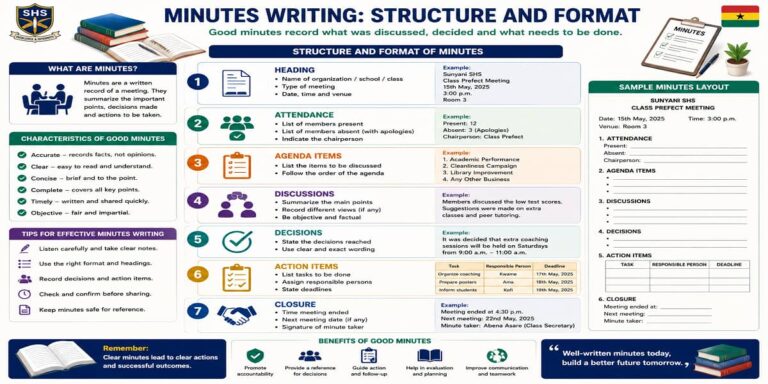
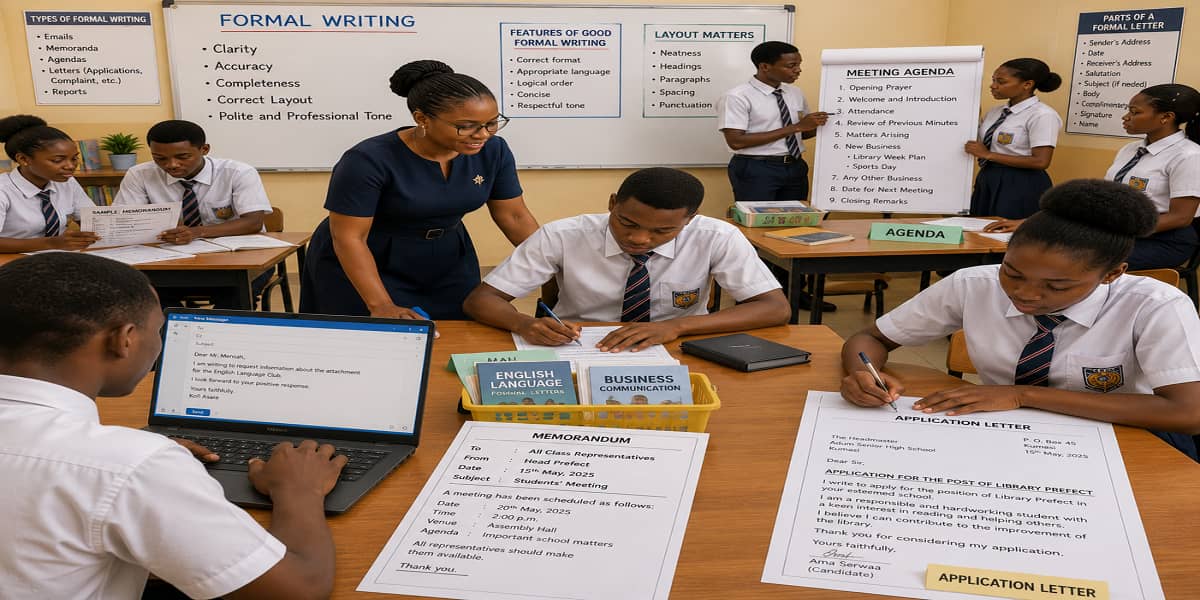
A memorandum (memo) is mainly used within organisations for internal communication. It differs from formal letters in its features, range of circulation and level of formality. The steps for writing a memo include writing a heading, providing a brief introduction, giving background information on the issue, outlining action items and timelines, including a closing statement and reviewing the document before sending.
A standard memo normally contains the headings To, From, Date and Subject, followed by the body of the memo.
An agenda outlines the activities or items to be discussed during a meeting. It helps participants prepare for the meeting and ensures discussions follow an organised sequence.
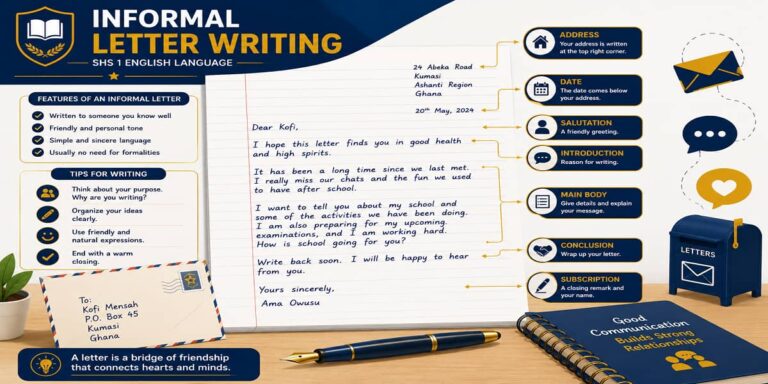
Formal letters are written for official or professional purposes such as expressing concerns, providing official information, ordering goods or applying for employment. Formal letters include business letters, letters of application and letters to the editor.
The features of a formal letter include the sender’s address, date, recipient’s address, salutation, heading or title, body (introduction, main body and conclusion) and subscription (closing, signature and full name). Learners should avoid contracted forms, use formal Standard English, write precise sentences, remain polite and conclude appropriately.
| Text Type | Purpose | Main Features |
|---|---|---|
| Transmit electronic messages | Appropriate subject and message | |
| Memo | Internal organisational communication | To, From, Date, Subject and body |
| Agenda | Guide a meeting | List of meeting activities or items |
| Formal Letter | Official communication | Addresses, salutation, heading, body and subscription |
| Feature of a Formal Letter | Purpose |
|---|---|
| Sender’s Address | Identifies the writer |
| Date | Shows when the letter was written |
| Recipient’s Address | Identifies the receiver |
| Salutation | Greets the recipient formally |
| Heading/Title | States the purpose of the letter |
| Body | Presents the message clearly |
| Subscription | Provides the formal closing and signature |
Examples
Example 1
Problem: Identify the appropriate text type for communicating official information within an organisation.
- Identify the audience.
- Determine whether the communication is internal.
- Select the appropriate text type.
Final Answer: A memorandum (memo) is the appropriate text type for internal organisational communication.
Example 2
Problem: State three features of a formal letter.
- Recall the structure of a formal letter.
- Select any three required features.
Final Answer: Examples include the sender’s address, recipient’s address and salutation.
Application and Activities
- Identify emails, memos and programme agendas by their features.
- Examine the formats of emails, memos and programme agendas.
- Compose emails, memos and programme agendas for specific situations.
- Compose introductory, body and concluding paragraphs for formal letters.
- Design story maps to guide the writing process.
Practice
- Outline the features of an email.
- Differentiate between a memo and a formal letter.
- Prepare an agenda for a class meeting using the appropriate format.
Summary
Different text types serve different communication purposes. Emails, memos, agendas and formal letters each have specific formats and features that help writers communicate effectively. Using the correct structure, formal language and appropriate formatting enables learners to produce clear and purposeful written communication for academic, professional and everyday situations.
Access NaCCA-aligned Support Packs
Download your structured NaCCA-aligned Teacher Support Pack and Student Learning Pack, designed for clarity, practicality, and reliable teaching and learning.